What a mind map is
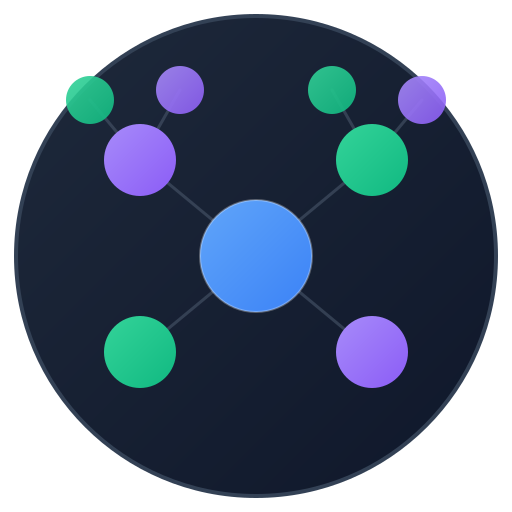
A mind map is a visual way to organize information around a central topic. The main idea sits at the center, related ideas branch outward, and connections show how the parts relate.
Traditional mind maps are often drawn by hand. With DeeplyClear, you can start from messy text and use AI to create the first structure.
How to make a useful mind map
Start with the topic, then separate the material into themes, supporting details, decisions, risks, and questions. A useful map is not only a pretty diagram. It helps you understand what belongs together and what needs attention.
Good starting points
Use any source material with enough context to organize.
- Class notes
- Meeting notes
- Research notes
- Brainstorms
- Long conversations
- Product ideas
After the map is created
Review the map, rename vague nodes, merge duplicates, and add missing connections. In DeeplyClear, you can also turn the map into a Clarity Tour so someone else can follow the reasoning.
What you get
What your first map can include
A useful first draft does not need to be perfect. DeeplyClear can help turn rough material into a map you can inspect and adjust.
- Central topic
- Main branches
- Supporting details
- Questions
- Decisions
- Next steps
Workflow
A simple workflow for getting the idea into shape
- 1
Choose the topic
Name the central idea, question, project, or conversation you want to understand.
- 2
Collect the material
Use notes, text, meeting takeaways, a transcript, or a brainstorm.
- 3
Create the first branches
Group related ideas into themes, details, decisions, risks, and open questions.
- 4
Connect the important parts
Show dependencies, causes, tradeoffs, and follow-up work.
- 5
Refine and present
Edit the structure and create a Clarity Tour when someone else needs the explanation.
FAQ
Common questions
What is the easiest way to create a mind map?
The easiest way is to start with existing text: notes, a brainstorm, a meeting summary, or a conversation. DeeplyClear can help turn that material into a first visual structure that you can edit.
What should I put in the center of a mind map?
Put the main topic, question, project, or decision in the center. The branches should explain the major themes, supporting details, risks, decisions, and open questions around it.
Can AI create a mind map for me?
Yes. AI can help extract themes and relationships from text. DeeplyClear uses that first structure as a starting point, then lets you refine the map and turn it into a guided Clarity Tour.
Is a mind map better than an outline?
A mind map is better when relationships matter. An outline is useful for sequence, but a map makes it easier to see clusters, dependencies, tradeoffs, and connections between ideas.
Next step
Use this workflow in DeeplyClear
Turn notes, docs, prompts, or product thinking into a map you can inspect, refine, and explain.